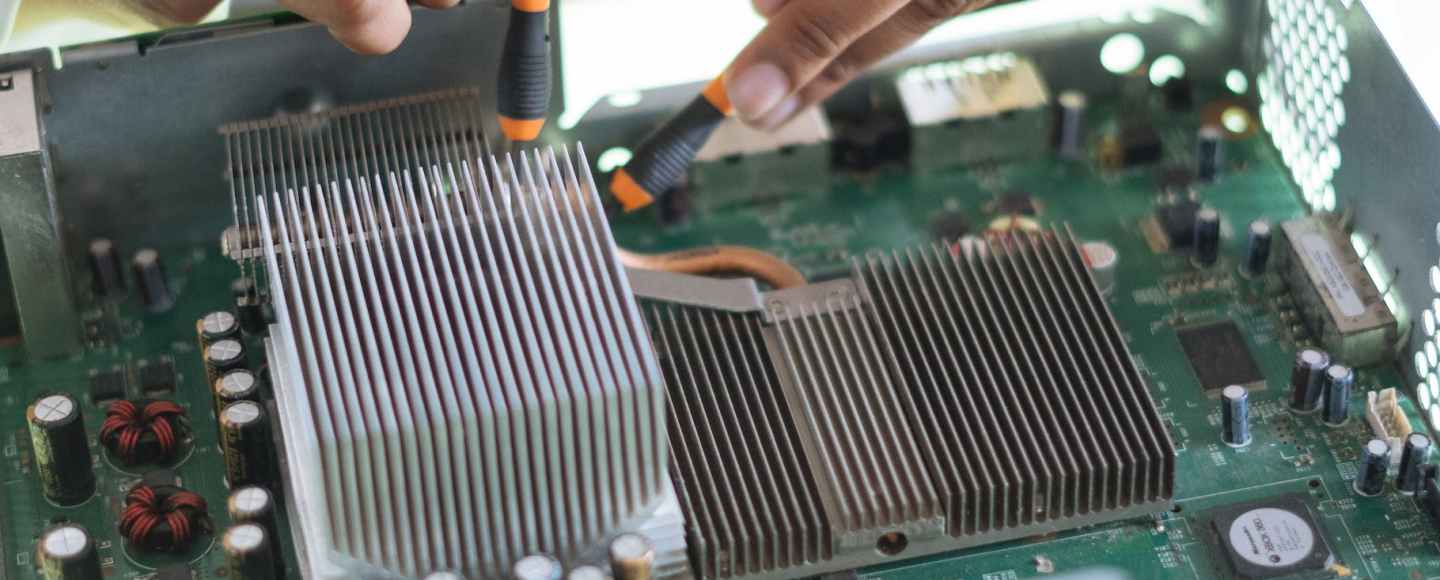

A year ago the global shortage of microprocessors was so great that it paralyzed supply chains and delayed the production of many products from smartphone and cars to medical equipment and factory robots.
The situation was so challenging that the chief executive of Netherlands-based ASML Holding NV (NDQ:ASML) made a comment during a conference call that took listeners by surprise. ASML makes the machines that make the chips. Peter Wennink said a major industrial conglomerate – who he did not name – was buying washing machines to pull out the chips and repurpose them.
Twelve months later the shortages have eased and demand for microprocessors is weakening. One reason is that customers are running down the supply of chips they accumulated last year during panic buying. And as high interest rates put a drag on the global economy consumers are spending less. This, in turn, is reducing the need for chips by manufacturers as they trim their sales forecasts.
“We’re living in a world there’s too much inventory and declining demand,” says Matt Bryson, senior vice president of research with Wedbush Securities Inc. in Boston. “I think 2023 is going to be a tough year.”

Even so, analysts say beyond the current weakness lies opportunity. One energizer is the expanding need for high end microprocessors that are used in artificial intelligence applications. Another lies with the less sexy, plain vanilla manufacturers. Their chips are found in everyday products from coffee makers and toaster ovens to chips that save photos on a PC or format the font on an Amazon Kindle. The Internet of Things is creating more connections between devices all the time.
“The Internet of Things is a megatrend,” says Mark Noble, executive vice president of exchange-traded fund (ETF) strategy at Horizons ETFs Management in Toronto. “We use semiconductors in everything. They are the hot sauce of technology.”
The out-of-the limelight manufacturers include Texas Instruments Inc. (NYSE:TXN), Analag Devices Inc., (NDQ:ADI) and NXP Semiconductors NV (NDQ:NXPI). They have well-developed businesses, lower costs for research and development and longstanding relationships with their customers. Their chips tend to make up a small portion of the cost of the product and are proven to work. As a result, end users are less inclined to swap them out and risk getting it wrong with a new supplier.
Proof of the profitability at the low end can be found in their dividend streams. Texas Instruments has increased its dividend in each of the past 17 years. Analog Devices has increased its dividend in each of the past 21 years.
While these lower end chipmakers have appeal, Mr. Bryson says on the on the other hand, they suffer from the same macro economic pressures as higher end manufacturers. They may suffer more in a downturn because a lot of their chips go into consumer products.
“So I don’t think that there’s safety in being more exposed to the low tech market,” Mr. Bryson says, “Companies tend to be doing better in areas where there’s demand growth.”
He is neutral on the short term prospects for industry leader Nvidia Corp. (NDQ:NVDA), even though he believes it has plenty of long term potential. Nvidia is best known for the graphic processing units (GPUs) used in video game systems and is also a leader in the chips used in artificial intelligence and cloud-based computing. These chips run autonomous robots, self-driving cars and drones. A growing area is the processors used by crypto-currency miners.
“Nvidia has the clearest path to selling into AI,” Mr. Bryson says. “You can see a clear trajectory.”
Nvidia’s shares have more than doubled this year, up 113 per cent at the recent price of US$ 312. May 23 Mr. Bryson also likes Taiwan Semiconductor Inc. (NYSE:TSM), the world’s largest microchip manufacturer.
“It is probably the best proxy for growth in integrated circuits,” he says. “They have the highest historic gross margins and a monopoly at the high end of the market.”

Mr. Noble notes that Nvidia’s stratospheric price earnings ratio of 179.5 May 23 reflects a high level of optimism and a lot of implied risk.
“You’re paying a massive premium for higher end artificial intelligence stocks,” he says.
Texas Instruments on the other hand has seen its shares rise 2 per cent this year and has a forward PE ratio of 19.3. Analog Devices has seen its shares rise 16 percent and has a PE ratio of 29.
“These companies are trading at more attractive valuations and have strong secular levers of growth,” Mr. Noble says.
Horizon markets the Horizons Global Semiconductor Index ETF (TSX: CHPS) which holds a broad slice of higher and lower end chipmakers. Despite its sky high valuation, Nvidia is its largest holding at 14 per cent of the ETF. Taiwan Semiconductor, Texas Instruments, Analog Devices and NXP Semiconductor combined account for another 19 per cent .
So what should an investor do?
“Diversification is your friend,” Mr. Noble says, arguing that a basket of stocks with exposure to different sub-sectors is the way to go because “you benefit dramatically from the trends regardless.”
H also sees a weak 2023, but “once inventory starts to decline and you get through the slowdown things will ramp up and the sector start to get very attractive.”
This article appeared in the Globe Advisor section of the Globe & Mail’s Report on Business on June. xx, 2023. For reprint information please view this page
 Adam Mayers
0 comments on “Amid AI hype, low end chipmakers carve a profitable niche”