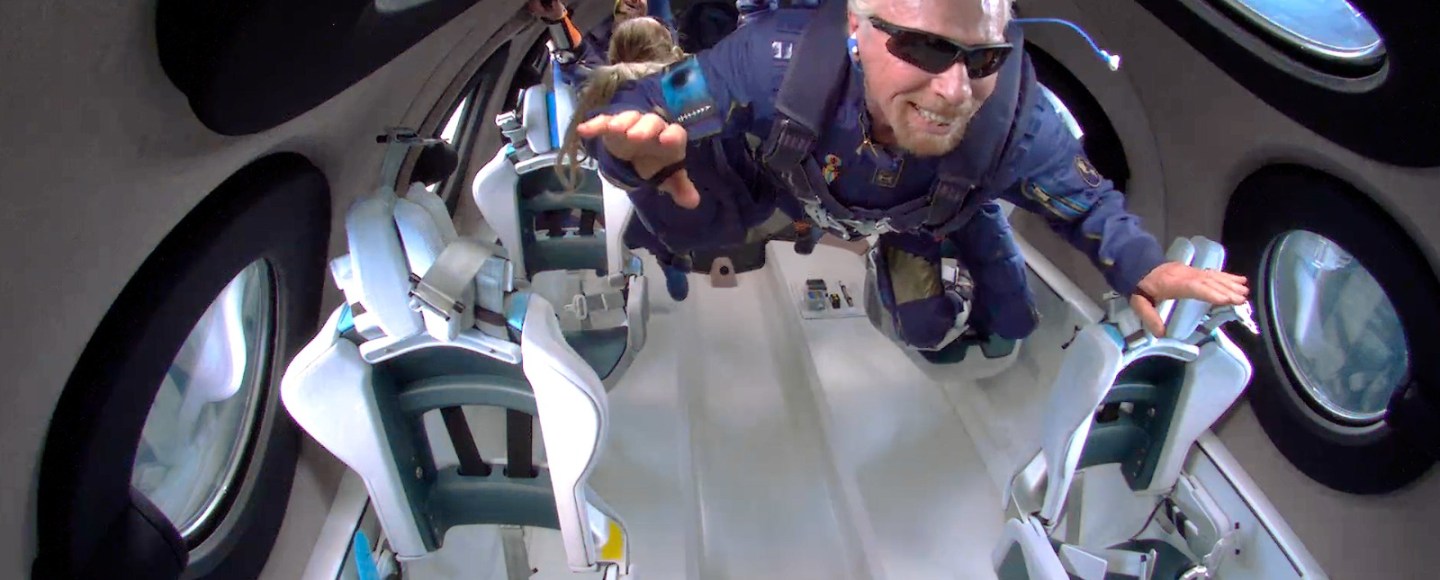

In early August, after decades of promises, billionaire Sir Richard Branson’s Virgin Galactic Holding’s Inc. took its first three space tourists into orbit.
A mother and daughter won a competition and the third passenger paid US$250,000 for the trip, which lasted an hour and included a period of weightlessness.
It was almost 20 years ago that Branson announced his intention to do this, with the belief then he could start a commercial service by 2007. Technical difficulties, including a 2014 fatal crash during a test flight, delayed things until now.
For all the excitement surrounding its first paying space tourists, Virgin Galactic (NYSE: SPCE) is barely hanging on. At their current value of $2.05, the shares have lost 96% of their value since their peak of US$56 in June 2021.
Space-themed stocks were hot commodities as little as two years ago as Branson, Amazon’s Jeff Bezos, and Elon Musk teased investors with plans for sub-orbital launches. It made for great headlines on the nightly news. Since then, most of the stocks and ETFs have crashed, taking a lot of investor money with them.
Two Canadian exchange traded funds launched within weeks of each other in April 2021, no longer trade. Oakville’s Harvest Portfolios Group Ltd. launched a space innovation fund and closed it a year later. It had fallen 28% in the 12 months after launch.

Emerge Canada Inc. launched a Canadian version of the ARK Space Exploration & Innovation ETF (ARCA: ARKX), sub-advised by Cathie Wood’s Ark Investment Management team. In mid-April, Emerge’s funds were placed under a cease trading order. At that point, the Emerge Ark Space Exploration ETF was 33% below its 2021 issue price. Emerge Canada’s fund are still in limbo. ARKX is still standing, but trades at 60% of its 2021 issue price.
In April, Elon Musk’s SpaceX rocket exploded minutes after launch. A few weeks later, a lander operated by Japan’s ispace Inc. crashed on the moon. On Aug. 19, Russia’s first lunar mission since the 1970s, an unmanned spacecraft, also crashed on landing. (A week later India made a successful landing near the moon’s South Pole.)
Meanwhile, another Branson company collapsed. Virgin Orbital Holdings Inc. It had planned smaller scale rocket launches than SpaceX but filed for bankruptcy April 4, two years after a US$3 billion initial public offering.
The many missteps highlight the risks of this particular sector, as well as the perils of theme investing in general. Whether space, cannabis, or the metaverse, themes tend to focus on new ideas that hold promise but are unproven. The investment choice is narrowed to the theme, which raises the level of risk. Investors pile in when the theme receives the most media attention, which is often when prices are about to peak.
Even so, there is opportunity in space. While space tourism makes the news, it has no real business. It is the satellites, the rockets to launch them, and command and control systems that are a better bet.
Satellite demand is being driven in part by the replacement of military and civilian devices launched as far back as the 1960s. There are new demands for cyber security and military use and increasing demand for internet and 5G communications. Satellite costs have fallen because of lower launch costs and reusable rockets.
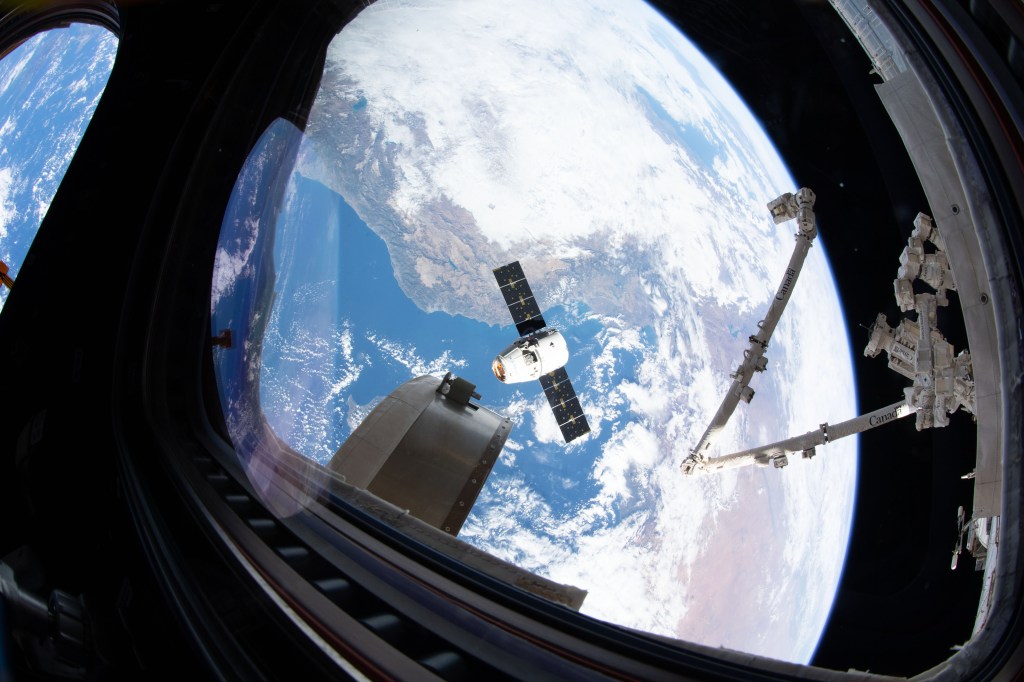
Those pluses might lead investors to aerospace and defence companies who have the size, experience, and scale to build complicated and expensive systems. They have well developed relationships with governments and space agencies.
There are two aerospace and defence ETFs with space components that have drawn the attention from investors.
The iShares US Aerospace & Defense ETF (NYSE: ITA) is the largest and oldest with $5.5 billion in assets. It was launched in 2006 and holds US companies that manufacture commercial and military aircraft and other defense equipment.
It has an average annual return of 10.5% since inception. RTX (see below) is its second largest holding. It also holds Virgin Galactic.
The Invesco Aerospace & Defense ETF (NYSE: PPA) has $2 billion in assets. It was launched in 2005 and has an average annual return since inception of 12%. RTX is a top five holding.
Here’s a closer look at RTX:
Background: RTX Corp. (NYSE: RTX), formerly Raytheon Technologies, manufactures aircraft engines, avionics, cyber security solutions, guided missiles, air defense systems, satellites, and drones. This includes satellite command-and-control systems as well as spacecraft components. NASA’s Mars Rover used RTX’s optical systems to view the landscape as it moved. A Raytheon assembly within the Rover serves up the drill bits it uses to mine the surface.
Performance: After a sharp drop in late July, the stock is down about 25% year-to-date at the recent price of US $75.
Financials: RTX has annual revenues of $67 billion. Year-over-year, revenue rose 12.3% in the second quarter to $18 billion with adjusted earnings per share of $1.29, about 11% higher than in 2022. The company attributed the strong results to global growth in commercial aviation, which has rebounded post-pandemic, and strong defence spending in the wake of Russia’s invasion of Ukraine.
RTX has adjusted its full year sales outlook to $73-$74 billion, up from $72-$73 billion, and confirmed its plans to spend $3 billion to repurchase shares.
Dividend: The company has increased its dividend for 30 consecutive years. It raised it with the June payment to $0.59 quarterly ($2.36 a year), for a current yield of 3.1%.
This article appeared in the Internet Wealth Builder on Sept. 5, 2023. For information on how to reprint this article please view this page.
 Adam Mayers
0 comments on “The perils of space stocks and out-of-this world investing”