

Canada’s wine and spirits market is a mature business with an all-weather durability.
While it isn’t recession-proof, the bigger players offer some insulation from down markets and slow and steady growth along with reliable dividends. Post-pandemic, spirits and wine are having a renaissance, with whiskeys in their many forms accounting for a large portion of spirit sales.
Among the top three overall categories, beer still remains number one with 35% of the market, according to Statistics Canada. But beer volumes are falling as younger consumers look elsewhere for their alcohol of choice. Wine sales take a solid second place at 31% and spirits are at 26%.
In the $7.6 billion spirits segment, consumption was almost flat in 2023. But within that was a big shift to ready-to-drink, pre-mixed products, which rose 8.2% year-over-year. The appeal is that they are an easy, hassle-free way to have a cocktail without the requirement of any bar tending skills.
One company taking advantage of the shift in consumer habits is Corby Spirit and Wine Ltd. (TSX: CSW.A, CSW.B) which has roots that go back 160 years. Since 2005 it has been majority owned by Paris-based Pernod Ricard SA, the second largest global wine and spirits’ company. It markets Pernod Ricard’s products in Canada. Corby has a dominant position and is growing its business with an acquisition in the pre-mixed market.
Corby’s shares are up 4% year-to-date and down 10.6% in the last 52 weeks at the recent price.
Corby has about a 21% per cent share of Canada’s spirits market. Its flagship J.P. Wiser’s Canadian whisky provides 80% of its revenue. Other brands include Lamb’s rum, Polar Ice vodka, and McGuinness liqueurs.
The remaining 20% of revenues come from Pernod Ricard’s international brands. They include Absolut vodka, Chivas Regal, Glenlivet and Ballantine’s Scotch whiskeys, Jameson Irish whisky, Beefeater gin, Kahlúa liqueur, Mumm Champagne, and Jacob’s Creek and Viejo wines.
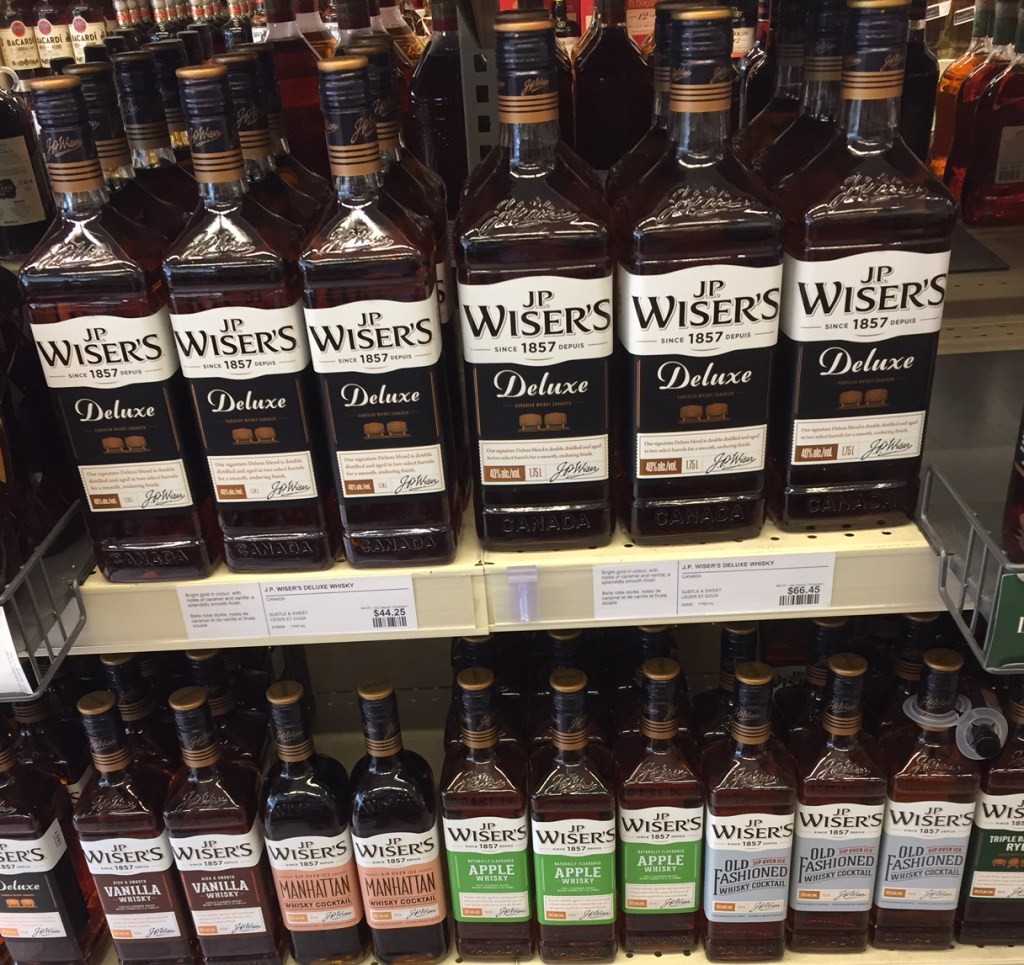
In a recent presentation to investors, Corby highlighted its strong market share in many spirits categories. It has a 16.5% market share in the vodka category, which after whisky is a top seller. Other shares include Canadian whisky (27%), single malt Scotch (22%), and Irish whisky at 78%. The latter is one of the fastest growing spirit categories along with bourbon and tequila.
Last June Corby bought Ace Beverage Group as an entre into the ready to drink market. Ace’s flagship brand is Cottage Springs, whose vodka soda and tequila soda brands are best sellers at the Liquor Control Board of Ontario (LCBO). Corby plans a marketing push into BC, Alberta, and Quebec which account for another 40% of the Canadian spirits market.
Corby reported robust third quarter earnings on May 10. Revenue rose 50% year-over-year. Adjusted net income of $0.20 per share was 44% higher.
The revenue growth was attributed to a rebound in domestic liquor sales and a strong contribution from Ace Beverage Group.
Corby’s $0.21 quarterly dividend, or $0.84 annually, yields a high 6.4% at current prices. Its dividend policy is to pay either 90% of trailing 12-month net income, or 60 cents a share annually, whichever is larger.
Corby has a dominant position in a mature industry and is taking aim at the ready to drink market. While rising interest rates have made all dividend paying stocks relatively less attractive, Corby does not have any long-term debt. As rates fall, Corby should gain.
The main risk is Pernod Ricard’s 51.6% ownership. While the two companies have enjoyed a mutually beneficial relationship, investors should note that this also means Pernod Ricard can exert a big influence over the terms of the relationship. So far, however, that does not appear to have been an issue.
This article first appeared in the Income Investor newsletter. For information on how to reprint this article please view this page.
 Adam Mayers
0 comments on “Corby’s high dividend worth a toast”