

Every investor is wondering about the damage to their portfolios from the protectionist policies of incoming US president-elect Donald Trump.
What we know so far is contradictory. He has promised blanket tariffs of 25% on all Canadian exports. But, he’s also talked about tariffs of between 10% and 15%, which seems more likely. We will know for sure on Jan. 20 when Mr. Trump takes office and promises to issue a long list of executive orders.
I sat in on a briefing by BMO Capital Markets which featured Steve Verheul, Canada’s chief trade negotiator during the first Trump administration. That round in 2018 replaced the North American Free Trade Agreement with the USMCA agreement. The USMCA is being redrawn in 2026.
The other panelists were Doug Porter, BMO’s chief economist and Yung-Yu Ma, Chief Investment Officer for BMO Wealth Management in the US.
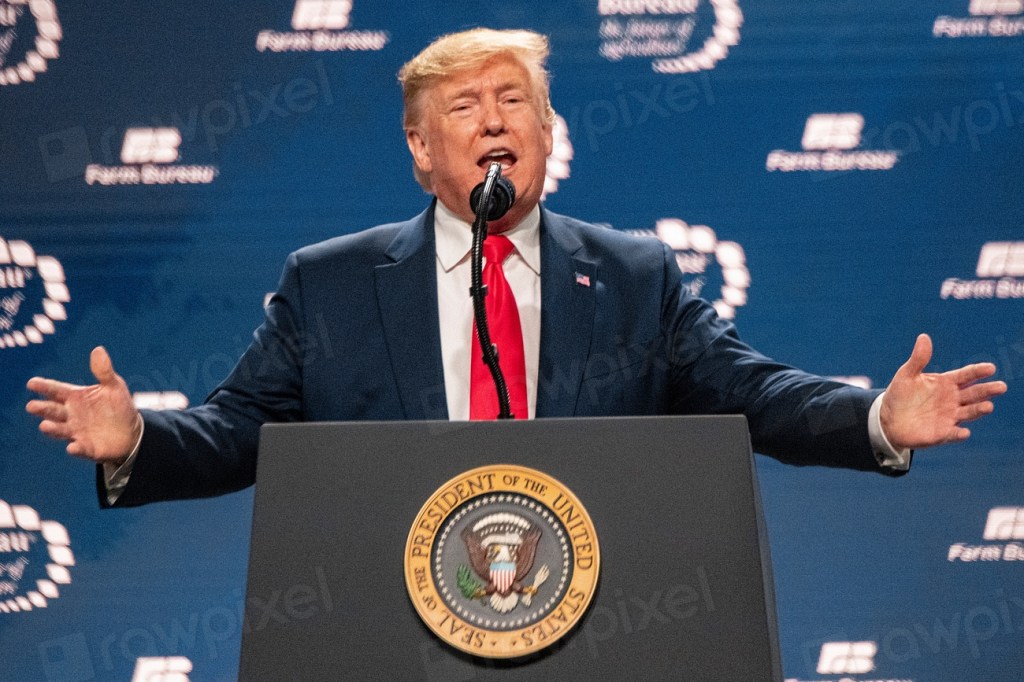
The message was that we should be wary about what lies ahead. Canada is not on the list of Trump friendlies, unlike Australia and the UK. The consensus is that a 25% export tariff is unlikely, but even so the federal government is preparing for the worst. The impact would be catastrophic given that 75% of our exports head to the US.
The more likely outcome is selective tariffs which remain on the table as bargaining chips for what the US wants in those 2026 negotiations. That will create uncertainty and economic pain for us over the next two years. Our stock market will be volatile, the dollar will drift lower which is inflationary and makes us poorer. In this case, the Bank of Canada will let rates fall further and faster, trading off inflation for growth.
What does President-elect Trump want from us? First, a commitment to stop illegal immigrants crossing into the US from Canada. He also wants us to crackdown on the smuggling of the drug fentanyl into the US. The fact that we account for 2% of the problem, according to Mr. Verheul, is irrelevant. He also wants better trade terms for American companies.
Here’s a summary of the conversation:
How serious is the threat?
Mr. Yung-Yu Ma said Trump 2.0 is different from Trump 1.0. Then he was an outsider, even within his own party Now he has firm control and believes he has a strong mandate because he won in a landslide, taking every single swing state and the popular vote. No Republican president has done that in 20 years. He will not feel restrained. His rhetoric attests to that.
Why has the US turned to tariffs?
Mr. Verheul says Donald Trump sees three main benefits to tariffs. High tariffs persuade companies to relocate in the US rather than pay the tax. That creates jobs. Secondly, tariffs help address trade deficits. US tariffs tend to be lower than other countries, so raising them levels the playing field. And thirdly, tariffs are a source of revenue.
Mr. Verheul noted that at a 25% tariff Canada is in a worse position than every other member of the World Trade Organization. Only Russia and North Korea would have worse access to the US.
That is at odds with the high level of integration of the North American economy. Canada and Mexico are the two largest trading partners of the US. We are theirs. The tariffs would hurt US customers and fuel US inflation.
And how would it work? The economies are so intertwined that car parts, for example, are shipped back and forth between the three countries with value added at each stage. What would be taxed?
Canadian oil is shipped through pipelines to Cushing, Oklahoma for refining. Canada and the US have essentially one customer which is each other. How would a tax benefit Americans?
This complicated trade reality is why the panel’s consensus was that the first tariff exemption will be for energy and agricultural products.
“The US is very sensitive to gasoline prices and prices at the grocery store,” Mr. Yung-Ma said. “The impact psychologically to consumers is extremely strong.”
He added that when it comes to oil, Canada has a special relationship with Mr. Trump. though not in the way one would think. Mr. Trump has said he is going put maximum pressure on Iran including squeezing its ability to export oil.
“That makes Canadian oil’s very important,” Mr. Ma said
So why is the TSX flying?
Mr. Porter says the TSX is touching new highs because financial markets “simply do not believe” a 25% tariff will come to pass. So the Mexican peso and Canadian dollar have been little changed. The TSX is up 6% since election day at the time of writing. Another reason is that the TSX reflects the global economy where many of the listed companies do business, not just Canada.

Markets are also focused on the positive aspects of Trump proposals including a lighter regulatory touch and tax cuts.
What are Canada’s options?
We have no choice but to address Trump’s border and drug concerns. We can also establish relationships with the Trump team. Prime Minister Trudeau’s visit to Mar-a-Largo was an effort to do just that. Conservative MP Jamil Jivani had dinner in Washington with vice-president-elect JD Vance recently. They are friends from Yale.
Did the Prime Minister’s visit help build a bridge? No. When he tried to talk about the damage to our economy of a 25% tariff, Mr. Trump interjected and said if Canadians didn’t like it, they could become America’s 51st state. He has joked about that since.
We can mobilize the US private sector. Major automakers have spoken out against tariffs as have major retailers including Walmart.
We might also retaliate with our own tariffs. The Prime Minister says we will. Ontario premier Doug Ford says he might consider cutting electricity exports to the US. But at one-eighth the US size, who hurts more?
Mr. Verheul worries that there is no unified Team Canada unlike last time. The provinces are at odds with each other and the federal government. He doesn’t believe a change of government will make a difference.
“When it comes right down to it, industry is going to have the same views [under a Liberal government] as they would have under a Conservative government,”
What will happen to rates and the dollar in 2025?
Mr. Porter says our dollar will struggle. BMO’s assumption has been that interest rates will fall by 1.25% to about 2.5% in 2025. He sees another 1 percentage point cut in the worst case. The dollar would fall below US $0.70 and the government would likely offer incentives for home building, home buying and take measures to stimulate spending.
Summary
Nothing was said directly about investment strategies, but the panel agreed we should prepare for a rough ride. They see the bullying as setting the table for a renegotiation of the USMCA in 2026. The one bright spot, if you can call it that, is Mr. Trump likes to bargain.
“It’s worth remembering that he took four companies into bankruptcy in order to renegotiate contracts,” Mr. Yung-Ma said.
Mr. Porter concluded that the lack of certainty and erratic behavior will put a chill on business investment in Canada.
We will know soon enough what the actual plan is, but all the signals are flashing red. A BMO economics headline quipped: “Tarrifying?”
The best defence as always is a diversified portfolio of high quality, dividend paying companies with a history of thriving in all conditions. They sell things we need in all conditions. They won’t escape the down draft, but they will fall least and recover first.
This article appeared in a recent issue of the Internet Wealth Builder. For information on how to reprint this article please view this page.
 Adam Mayers
0 comments on “Your investments and Trump tariffs”